
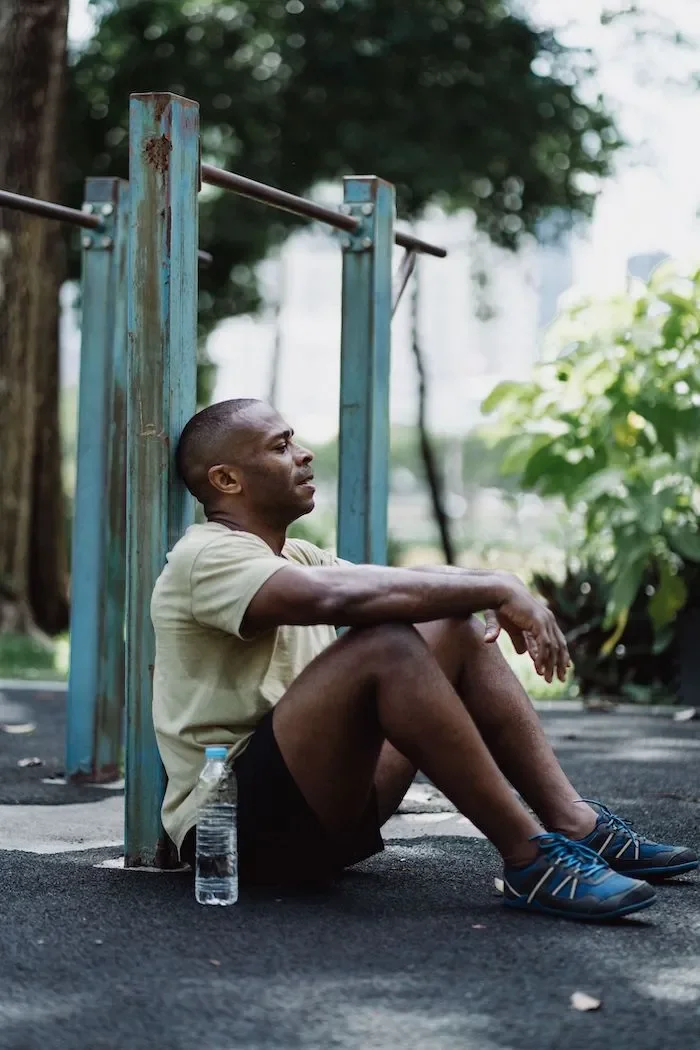
Male sport is a breeding ground for loneliness and isolation.
Yes, a bold statement. I can attest to being part of male sporting environments where this wasn't the case. I've experienced meaningful connections with other male athletes and coaches, many of which have extended well beyond the playing field. And yet, the culture and systems established within male sporting environments, both overtly and covertly, can reinforce a different dynamic: even when you're part of a team, you may not have anyone you feel comfortable turning to for genuine support.
You can be surrounded by 5, 10, or 20 teammates, sharing practices, competitions, victories, and defeats. On the surface, you belong to an established community. But does being part of a team actually foster meaningful, emotional, and vulnerable connections with other men? Or have we confused being around people with actually feeling connected to them?
Learning the Unspoken Rules of Being a Male Athlete
Recently, I was reminded of how early these dynamics can begin while watching my own son participate in a flag football game. The opposing coach seemed to embody many traditional masculine expectations associated with male sports: showing little emotion, communicating in a stern and authoritative manner, and treating a game involving five- and six-year-olds with an intensity far removed from the developmental purpose of youth sports. Even as the game was ending, there was an insistence on getting additional plays to ensure his team had the opportunity to win.
While this was one isolated experience, it got me thinking about the messages young boys receive about what it means to be a male athlete:
Suck it up- My needs don’t matter and I need to push through the pain regardless of what I’m experiencing.
Put a Band-Aid on it- Addressing my struggles is a weakness and I need to hide or minimize my pain.
Don't let them see you struggling- If others see me struggling, they will lose respect for me.
Don't show emotion- Emotions are a liability and showing them makes me weak or vulnerable.
Earn your spot- My worth is conditional on my performance, effort, or ability to prove myself.
Don't give someone else an opportunity to take yours- I cannot trust others and I must constantly protect my position or risk losing it.
These messages can teach young athletes that struggles should be navigated independently, and that vulnerability is incompatible with being a strong competitor.
When Competition Gets in the Way of Connection
Athletes are encouraged to be part of a team, build relationships, and support one another. Yet, they may simultaneously compete with those same teammates for playing time, starting positions, scholarships, and recognition. How does an athlete learn to be vulnerable with someone they believe could eventually take their place?
Athletes are often celebrated when things go well. Great plays, victories, personal records, and individual accomplishments receive attention. But what happens when things aren't going well? When confidence disappears, mistakes accumulate, playing time decreases, or an injury sidelines an athlete?
Too often, the focus shifts to the next performance, the next opportunity to win, and the expectation to push through, suppress emotions, and overlook personal struggles, leaving athletes to navigate their challenges alone.
Redefining Mental Toughness
When athletes don't feel comfortable sharing their experiences, disappointment becomes something to internalize, anxiety something to hide, and injury something to push through rather than acknowledge. Without meaningful emotional support, difficult experiences can become even more isolating.
Perhaps we need to expand our definition of mental toughness. Being mentally tough doesn't mean suppressing emotions, navigating every challenge independently, or pretending everything is fine. It can also mean having the courage to communicate when something isn't right, acknowledging disappointment, developing meaningful relationships, supporting teammates through adversity, and recognizing when you need help.
The goal isn't to eliminate competition or toughness from sport. It's to create environments where competitiveness and emotional connection can coexist.
Creating a Culture of Connection
We have an opportunity to be more intentional about the environments we create for young male athletes:
Coaches: Prioritize relationships and emotional development alongside performance and results.
Parents: Reinforce that their child's value isn't dependent on athletic success.
Teammates: Develop relationships that extend beyond competition and performance.
Athletic organizations: Normalize conversations about mental health and help-seeking.
Athletes: Recognize that vulnerability and connection are strengths, not liabilities.
Perhaps the question we should be asking isn't why male athletes struggle to communicate their emotions, ask for help, or develop meaningful connections. Perhaps we should be asking what we have created within sport that makes those things so difficult in the first place.
We cannot continue to celebrate toughness while overlooking the emotional experiences of the athletes we coach, support, and develop. If we genuinely want to support the mental health of male athletes, we need to rethink what strength looks like, what connection means, and what it truly means to be a teammate.
Because being surrounded by people should never mean having to face everything on your own.
If you or your young athletes are struggling with loneliness and isolation and would like to learn more about mental resilience, please contact us at BrykMinds.